







Preventing Pterygium (Surfer's Eye) with Sunglasses
TL;DR: How to Choose Sunglasses to Prevent Pterygium
Condition: Pterygium (Surfer's Eye) is a tissue growth on the eye's surface caused by UV radiation, wind, and dust.
Primary Cause: Ultraviolet (UV) light is the biggest risk factor. The "Coroneo Effect" explains how light entering from the side is focused onto the part of the eye where pterygia commonly form.
Prevention is Key: Wearing the right sunglasses is the most effective way to prevent this condition.
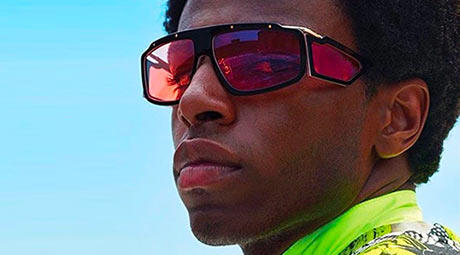
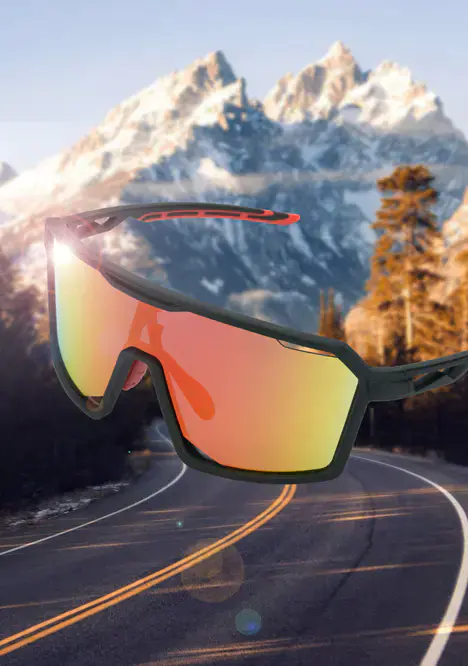
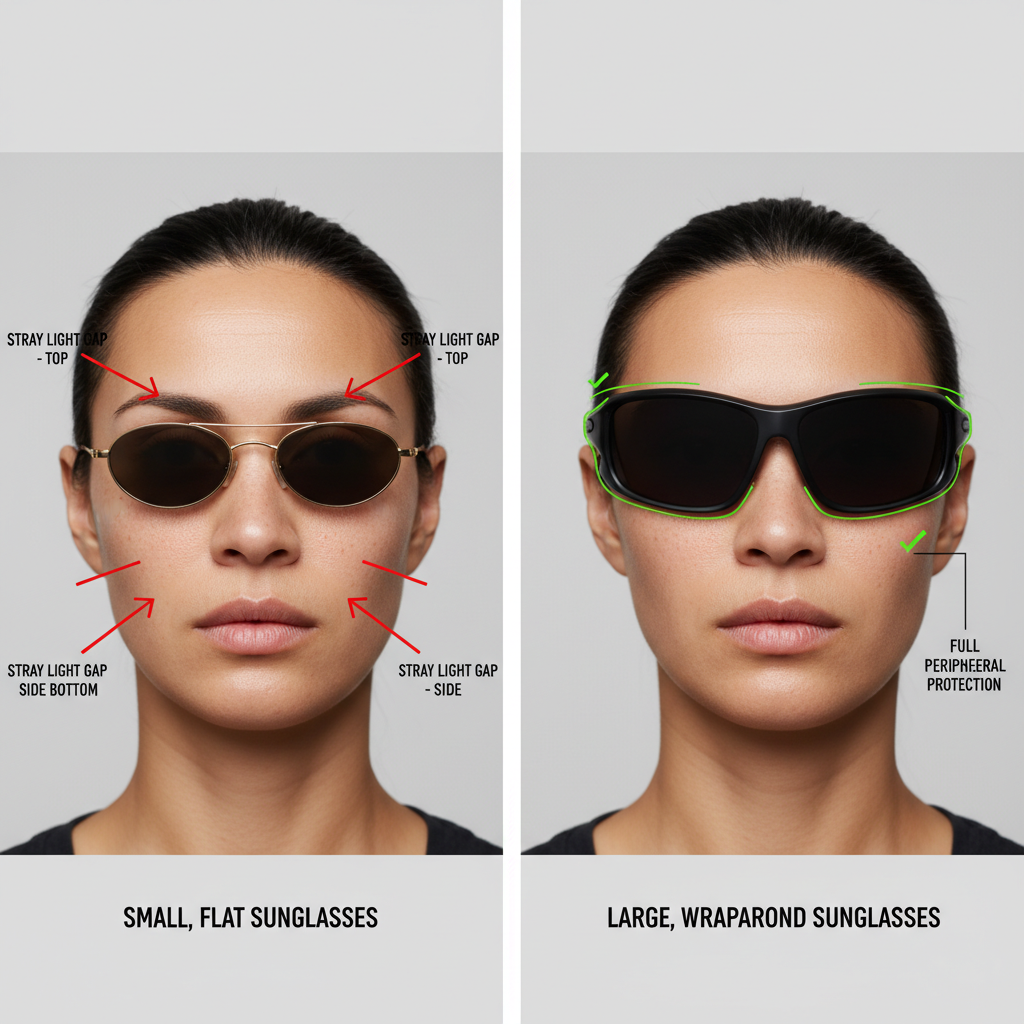
Frame Choice: Choose large, wraparound-style frames that sit close to the face. This blocks peripheral light from the top, bottom, and sides—a major source of UV exposure.
Lens Requirements: Insist on lenses labeled "UV400" or "100% UVA/UVB Protection." Lens darkness and color do not indicate UV protection.
Material: Polycarbonate lenses are an excellent choice as they are naturally UV-blocking and highly impact-resistant.
Pterygium, often called "Surfer's Eye," is more than just a cosmetic issue. It's a physical growth of tissue on the surface of your eye that can cause irritation, redness, and, in advanced cases, interfere with your vision. While it’s common among surfers, it can affect anyone who spends significant time outdoors without proper eye protection. The primary culprit is chronic exposure to ultraviolet (UV) radiation from the sun.
Fortunately, pterygium is highly preventable. Understanding how it develops and what constitutes effective protection is the first step toward safeguarding your long-term eye health. This guide breaks down the science behind the condition and provides a practical checklist for choosing sunglasses that offer maximum defense.
What is Pterygium and Why Does It Form?
A pterygium is a wedge-shaped growth of the conjunctiva (the clear membrane covering the white of your eye) that extends onto the cornea (the clear front part of the eye). While the exact cause involves a combination of factors, including wind and dust, research overwhelmingly points to UV radiation as the main driver.
The "Coroneo Effect": How Side-Angle Light Damages Your Eyes
One of the most critical findings in eye safety is the "Peripheral Light Focusing" mechanism, also known as the Coroneo Effect. A detailed review in the journal Photochemistry and Photobiology explains that UV rays entering the eye from the side (the temporal side, near your temple) are focused by the cornea onto the nasal limbus—the edge of the cornea on the side of your nose. This is precisely where pterygia most commonly develop.
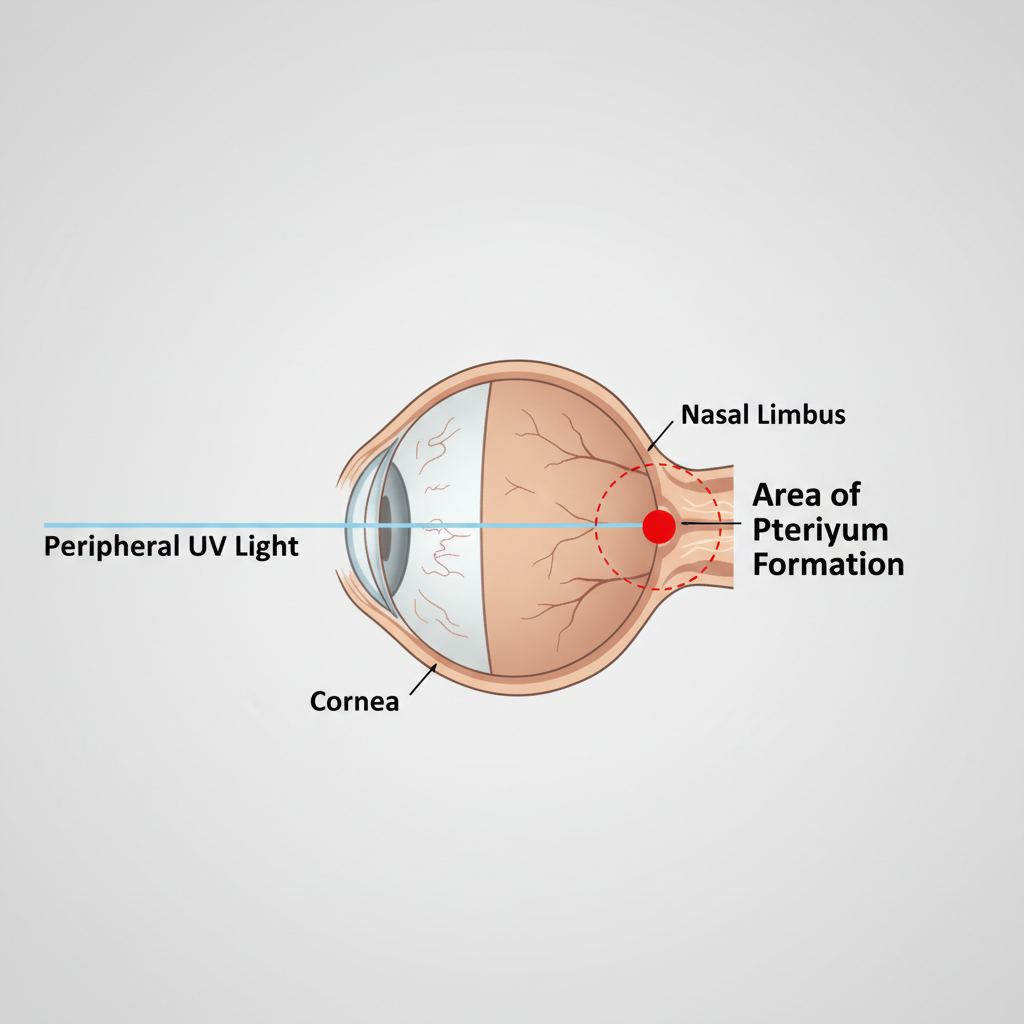
This phenomenon means that even if you are not looking directly at the sun, your eyes are still vulnerable to significant UV exposure from the periphery. It underscores why the shape and fit of your sunglasses are just as important as the UV rating of the lenses themselves.
Common Myth: "My Eyes Feel Fine, So There’s No Damage"
UV damage is cumulative and often silent. Much like sun damage to the skin, the effects of UV radiation on the eyes build up over a lifetime. You may not feel any discomfort during exposure, but the cellular changes that lead to conditions like pterygium, cataracts, and other ocular diseases are slowly taking place. Research shows a direct link between UV exposure and these conditions, with one study in Taiwan finding that individuals who didn't wear sunglasses had a 57% increased risk of cataracts.
The Non-Negotiable Features of Protective Sunglasses
Choosing sunglasses can feel overwhelming, with countless styles and features available. However, when it comes to preventing pterygium, only two factors are truly non-negotiable: UV400 protection and comprehensive coverage. Many people mistakenly believe that a darker lens offers more protection, but this is a dangerous misconception. In fact, as detailed in our article on whether darker sunglass lenses are more UV protective, dark lenses without certified UV filters can cause your pupils to dilate, potentially allowing more harmful UV radiation to enter the eye.
Protective Sunglasses Checklist
Use this table as a guide to ensure you select frames and lenses that offer true protection.
| Feature | Minimum Requirement | Why It Matters | Expert Tip |
|---|---|---|---|
| UV Protection | Labeled "UV400" or "100% UVA/UVB Protection" | This ensures the lens blocks all UV rays up to 400 nanometers, which covers the entire harmful spectrum. Anything less, like older UV380 standards, leaves a gap that contains up to 45% of the total solar UV energy. | |
| Frame Coverage | Large, wraparound style that sits close to the face | Blocks peripheral UV light from entering from the sides, top, and bottom, directly countering the Coroneo Effect. A 3D study found that middle-sized, cosmetic frames offer the least protection due to this leakage. | |
| Lens Material | Polycarbonate or Trivex | These materials are inherently 100% UV-blocking and are far more impact-resistant than standard plastic or glass, as recommended by the American Optometric Association for safety. | |
| Fit | Temples should be level, with minimal gaps around the cheeks and brow | Gaps allow reflected light to enter. A common fitting mistake is having the temples sit too high, creating an open angle for UV rays bouncing off surfaces like water or pavement. |
Debunking Another Myth: Polarization vs. UV Protection
Many assume "polarized" is synonymous with "UV protected." This is incorrect.
Polarization is a filter that only blocks horizontal light waves, which we perceive as glare from flat surfaces like water, roads, or snow. It enhances comfort and visual clarity.
UV Protection is a separate treatment or inherent property of the lens material that absorbs or blocks high-energy ultraviolet radiation.
While many high-quality sunglasses are both polarized and UV400-rated, the two are not the same. You can have a polarized lens with zero UV protection, which is dangerous. Always verify the UV400 rating independently of its polarization feature. The risks associated with unverified lenses are significant, as they can lead to hidden eye damage from uncertified sunglasses.
High-Risk Scenarios and Advanced Protection
Certain environments and activities dramatically increase your UV exposure and the risk of developing pterygium.
On or Near Water: Water reflects a significant amount of UV radiation, nearly doubling your exposure.
Snowy Conditions: Snow can reflect up to 80% of UV rays, making proper eye protection essential for skiing and other winter sports.
High Altitudes: UV radiation intensity increases by about 10-12% for every 1000 meters in altitude.
Outdoor Occupations: Landscapers, construction workers, and farmers should consider wraparound frames or even those with added side shields for maximum occupational safety.
Even on cloudy days, up to 80% of the sun's UV rays can penetrate the clouds. Consistent, year-round protection is the best strategy.
Frequently Asked Questions (FAQ)
Can pterygium be treated?
Yes, a pterygium can be surgically removed if it causes significant discomfort or begins to obstruct vision. However, the procedure carries risks, and recurrence is common, especially if the patient does not adopt consistent UV protection post-surgery.
How often should I replace my sunglasses?
Some research suggests that the UV-blocking efficacy of lens coatings can degrade over time with prolonged exposure to the sun (a process called photobleaching). A practical approach is to replace your primary outdoor sunglasses every 2-3 years, especially if you notice significant scratches or live in a high-UV environment.
Are expensive sunglasses always better?
Not necessarily. Price does not guarantee protection. A study on sunglasses from various markets found that cost did not always correlate with UV-blocking ability. The most important factor is a verified "UV400" or "100% UV Protection" label from a reputable source that adheres to FDA regulations for eyewear as a Class I medical device.
Disclaimer: This article is for informational purposes only and does not constitute professional medical advice. If you have concerns about your eye health, are experiencing symptoms of pterygium, or have pre-existing conditions, please consult a qualified ophthalmologist or optometrist.
References
Roberts, J. E. (2011). Ocular Phototoxicity. Photochemistry and Photobiology, 87(4), 957-966. Link
Wang, S., et al. (2021). Outdoor-Related Factors and the Risk of Age-Related Cataract in a Rural Population of Taiwan. International Journal of Environmental Research and Public Health, 18(15), 8031. Link
Masili, M., & Schor, P. (2014). Ultraviolet protection of sunglasses: A review of the Brazilian standards. SPIE Proceedings. Link
Sliney, D. H. (2019). Ocular UV dosimetry: the role of spectacle and sunglass frame-lens-face geometry. Photochemical & Photobiological Sciences, 18(11), 2683-2693. Link
American Optometric Association (AOA). (n.d.). UV Protection. Link


